

What Makes Leadership Education Different?
A framework, not a curriculum.
LEMI Leadership Education isn't a set of books, and it's not a teaching technique you can check off a list. It's a mentoring framework built around one central question: what kind of person is this learner becoming, and what mentoring, environment, and real-world work will help them get there?
LEMI in one sentence: LEMI trains parents and educators to mentor children and youth through developmental phases so they can grow in character, scholarship, self-government, leadership, and finding and sharing their personal genius.
Most homeschool philosophies are defined by how they teach: the books they use, the pacing, the amount of freedom given to the child. LEMI and Leadership Education start somewhere else. It equips the adult to ask who the learner is becoming, then builds everything else around that answer.
How LEMI & Leadership Education Compares
You've probably encountered other homeschool philosophies, maybe even used pieces of them. Here's where LEMI & Leadership Education overlap with each one, and where it stands apart.
-
Charlotte Mason education is known for living books, narration, habits, nature study, and short lessons. Leadership Education shares the same love of good books, strong habits, beauty, and respect for the learner, and plenty of LEMI families use narration and nature study too.
Leadership Education doesn't reject any of that. It just doesn't define education by one set of practices.
A LEMI mentor starts with the learner, not the method, learning to notice what's really going on beneath a child's behavior and what kind of growth is actually needed. One child might need more confidence, another a clearer sense of what's possible, another just a skill taught more clearly. Living books and narration are useful tools, chosen because they fit that particular learner, not because they're required.
-
Classical education is built around great works, historical study, language, logic, and rhetoric. Leadership Education shares that same respect for classics, disciplined scholarship, and ideas that have shaped civilization.
The real difference isn't whether classics get used. It's what the mentor is trying to accomplish with them.
Leadership Education doesn't move every learner through the same sequence at the same age. Classics and real projects show up at every phase, but a mentor shapes both the reading and the work around the child. Classics act almost like mentors themselves, letting a learner wrestle with real choices, consequences, and who they're becoming.
Leadership Education also pushes learners toward principles, asking not just what happened, but what beliefs and systems produced it, and eventually, what should be preserved, improved, or changed. The goal isn't just familiarity with great books. It's judgment, self-government, and the ability to apply what's true in real life.
-
Eclectic homeschooling mixes curricula and resources based on a family's needs. LEMI families do plenty of mixing too: living books, textbooks, online courses, apprenticeships, and hands-on projects.
The difference is that LEMI gives a mentor real principles for choosing. Instead of just asking "Do we like this curriculum?", a LEMI mentor asks what this learner actually needs right now, whether that's confidence, a specific skill, more knowledge, or a stronger personal connection to the material, and picks resources accordingly.
Eclectic choices become part of a Leadership Education when they're used on purpose to support that growth, not just gathered into a varied program.
-
Montessori relies on a prepared environment, hands-on materials, and independent work. Leadership Education shares that respect for independence and hands-on learning.
The center of Leadership Education is the relationship between mentor and learner, not the materials. The mentor watches, asks questions, and decides whether to demonstrate something, teach directly, work alongside the learner, or step back and let them struggle productively.
Learners get real agency: mentors inspire them toward something worth doing, invite them to take it on, help them commit to it, and then create space afterward to reflect on how it went. Independence grows out of that whole process, not from simply being left alone.
-
Project-based learning centers education on real questions, investigation, and sharing finished work. LEMI uses projects constantly for the same reasons.
In Leadership Education though, a project works as a chance for growth, not just an assignment format. The mentor thinks about what this learner needs to develop through the work, which might be a skill, but might just as easily be patience, courage, or a stronger sense of purpose.
Projects also give learners practice with a real cycle: face a challenge, make choices, act, deal with consequences, reflect, and try again. The finished product matters, but what's happening in the learner along the way matters just as much. Leadership Education doesn’t measure how many projects get finished. Projects are one of several tools mentors use to connect real work with personal growth.
-
Traditional school-at-home education relies on grade-level curriculum, direct teaching, and testing. Leadership Education can use plenty of the same tools: instruction, memorization, deadlines, and assessment all have their place.
The difference is why the structure exists and what role the adult plays. A traditional teacher starts with the curriculum. A LEMI mentor starts with a vision for the learner's growth, then picks content and builds experiences to support it.
When a learner struggles, the mentor doesn't just add more assignments or consequences. The mentor looks deeper: is something missing, an underdeveloped skill, discouragement, or simply no personal connection to the work yet. Academic progress matters, but so does growth in character, ownership, and self-government.
-
A unit study organizes learning around one book, theme, or period. Leadership Education can use this kind of integrated learning too, but a unit study is really just a way to organize content. It doesn't determine why education happens or how a learner develops over time.
A LEMI mentor might build a unit around a classic or a big question, but the goal isn't just connecting subjects. The mentor is also watching for what the learner is starting to notice, what's becoming personally important to them, and what kind of work would help them grow. The theme supports the learning. The learner's development stays at the center.
-
Unschooling lets learning grow from a child's own interests and everyday life. Leadership Education shares that same respect for curiosity and a learner's growing responsibility for their own education.
But Leadership Education doesn't treat agency as the absence of adult direction. The mentor still has real responsibility: introducing worthy ideas, modeling scholarship, and inviting the learner into real work, because kids don't always know what's possible or what might spark something in them.
LEMI mentors try to influence without controlling. They inspire before they invite, and they honor a learner's choices while still teaching commitment and follow-through. Freedom here works as the environment where a learner practices self-government, not as the finish line, and grows capable of choosing what's good and worthwhile, even when it's hard.
-
Waldorf follows a specific developmental sequence built around imagination, art, movement, and rhythm. Leadership Education shares that appreciation for developmental timing, beauty, and educating the whole person.
Leadership Education doesn't require that same sequence or a fixed set of artistic practices, though. Its phases help a mentor notice changing needs and levels of responsibility, but the mentor still has to see the individual child rather than rely on age alone.
Creative experience can sit right alongside direct instruction, discussion, and real projects. What matters isn't which tradition an activity comes from. It's whether it creates what this particular learner needs to grow. As learners mature, Leadership Education leans more into disciplined scholarship, purpose, and understanding how the world actually works.
What Actually Makes an Education "LEMI"?
A book list or a pile of projects doesn't make an education Leadership Education. A family can do all of that and still not be using LEMI's full approach.
Leadership Education starts with the mentor. The mentor works on their own growth first, and tries to influence through example and relationship rather than just instruction.
The mentor learns to look past behavior and completed work to understand what a learner is actually experiencing, and what they need next: more knowledge, a specific skill, more confidence, or a bigger sense of what's possible.

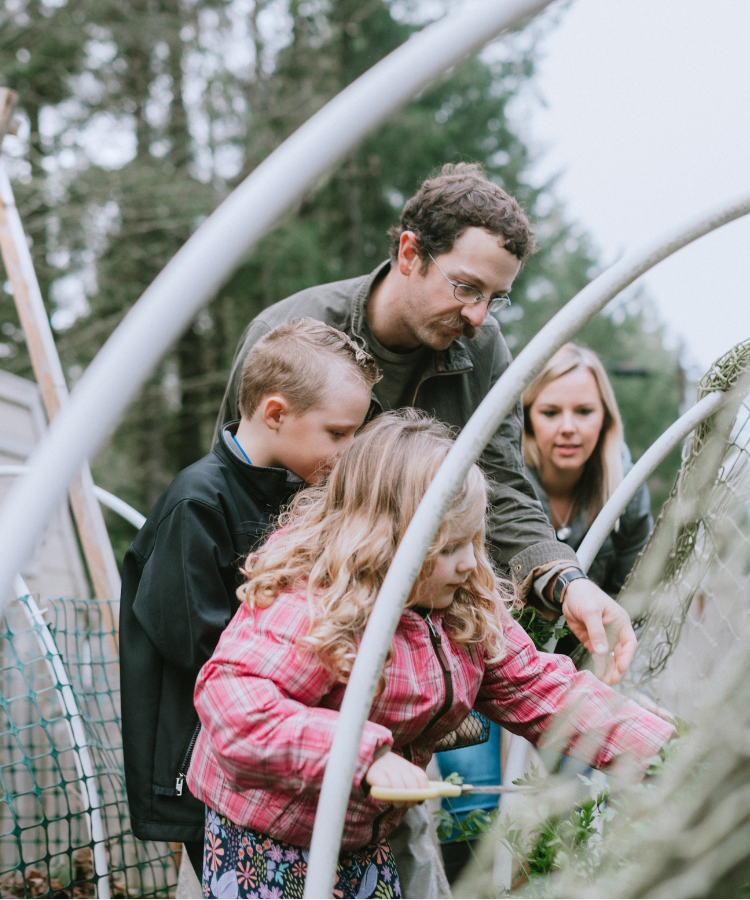
The mentor builds real experiences around that: classics, discussions, simulations, projects, service, and hands-on work, all used to help a learner connect with ideas, build character, and grow more capable.
The learner is inspired toward something worth doing, invited to take it on, helped to commit, and given space afterward to reflect on what happened. Choice always comes with responsibility.
As a learner grows, the amount of structure, freedom, and ownership shifts. They also grow from facts to principles, and eventually to understanding how families, communities, and institutions actually work, and how to improve them.
The mentor keeps growing too. Nobody's arrived. Mentors keep learning right alongside their kids.
The Deeper Question
Most homeschool methods are defined by what's taught or how lessons are organized. Leadership Education and LEMI ask something different: who is this learner becoming, what do they need next, and how can I help without taking away their agency?
That shift changes the parent's role, the purpose of academics, and what success actually means.
LEMI helps you, the mentor, inspire, guide, hold your child accountable, and help them become self-directed learners who keep teaching themselves long after you've handed things over. Discovery and Scholar projects are the vehicle for that: real learning environments where kids stretch themselves, collaborate, work independently, discover their own genius, find meaning, and learn to contribute.
LEMI does more than teach differently. It raises self-governing people who know their purpose and use it to make things better.