

Bring great books to life.
GET YOUR FREE GUIDE TODAY!
Start with one classic, one question, and one meaningful project.
〰️
Start with one classic, one question, and one meaningful project. 〰️
Choose Your First Classic
Each guide gives you twelve reading sessions, discussion questions, and project ideas already built around one classic, so you can begin today without planning a thing.
Ready to Begin?
Start with One of These
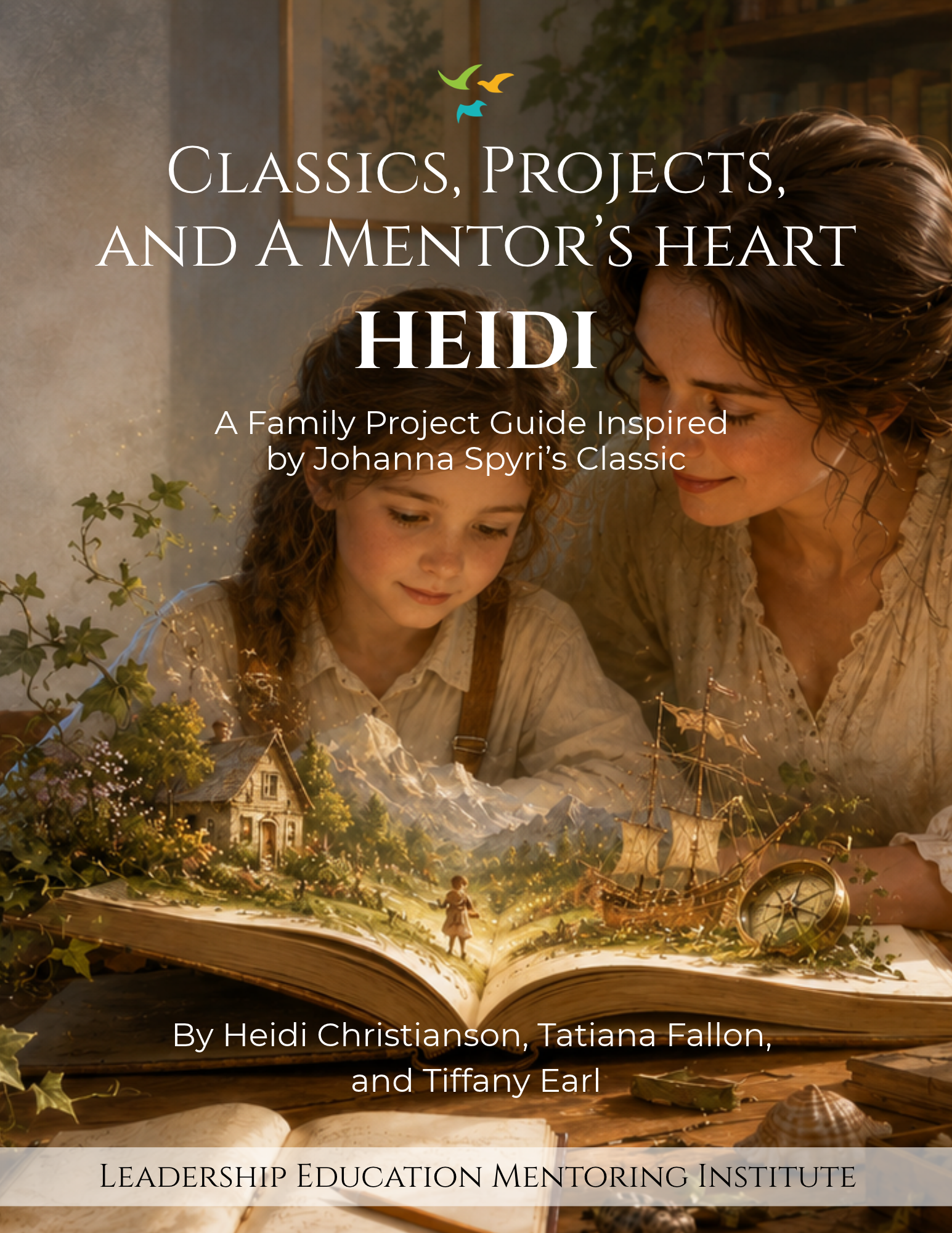
Classics, Projects, and a Mentor's Heart: Heidi
A Family Project Guide Inspired by Johanna Spyri's Classic
By Heidi Christianson, Tatiana Fallon, and Tiffany Earl | Leadership Education Mentoring Institute
Help your children discover where they belong, and what they have to give.
You want all your children, from your youngest listener to your teen, to love great books, think for themselves, and keep gathering on the couch with you. With a little guidance, a good book can become the best part of your day, full of real conversation and ideas your children want to follow.
This is a gentle place to start, for your children and for you.
Heidi is five when her aunt leaves her in the Swiss Alps with a grandfather the whole village fears. On the mountain she finds goats, wildflowers, and a home, until she’s taken to Frankfurt and has to find her way back. Along the way, a lonely old man, a girl who cannot walk, and a boy who will not read all begin to change.
Why this book
Belonging. Children think about what makes a place feel like home, and how to welcome others.
People change when someone cares. Grandfather softens, Clara walks, and Peter learns to read because someone believed in them and waited until they were ready.
Comfort isn’t the same as thriving. Heidi wilts in a fine house in Frankfurt and comes alive on the mountain, a good way into talking about what children really need.
One child can make a difference. Heidi notices, listens, and shares what she has, and the people around her are changed by it.
A great book and a project are real learning. A single project pulls several subjects together. A relief map of Heidi’s mountain brings in geography, math, and art, and following wheat from the field to a finished loaf covers science and math. Afterward, you can write down what it covered for your records.
How it works
Get the book. It’s at almost any library and free to read online.
Read a session together, about two chapters at a time.
When an idea won’t let go, help it become your child’s own project.
Inside: twelve reading sessions covering all 23 chapters, with vocabulary and discussion questions; a guide to asking questions that lead to thinking; printable bookmarks and a Family Quote Wall; activities from ten minutes to an afternoon; dozens of project ideas plus four larger ones; and printable planning and sharing forms.
Don’t let read-aloud time quietly slip away. Gather everyone close and open the book.
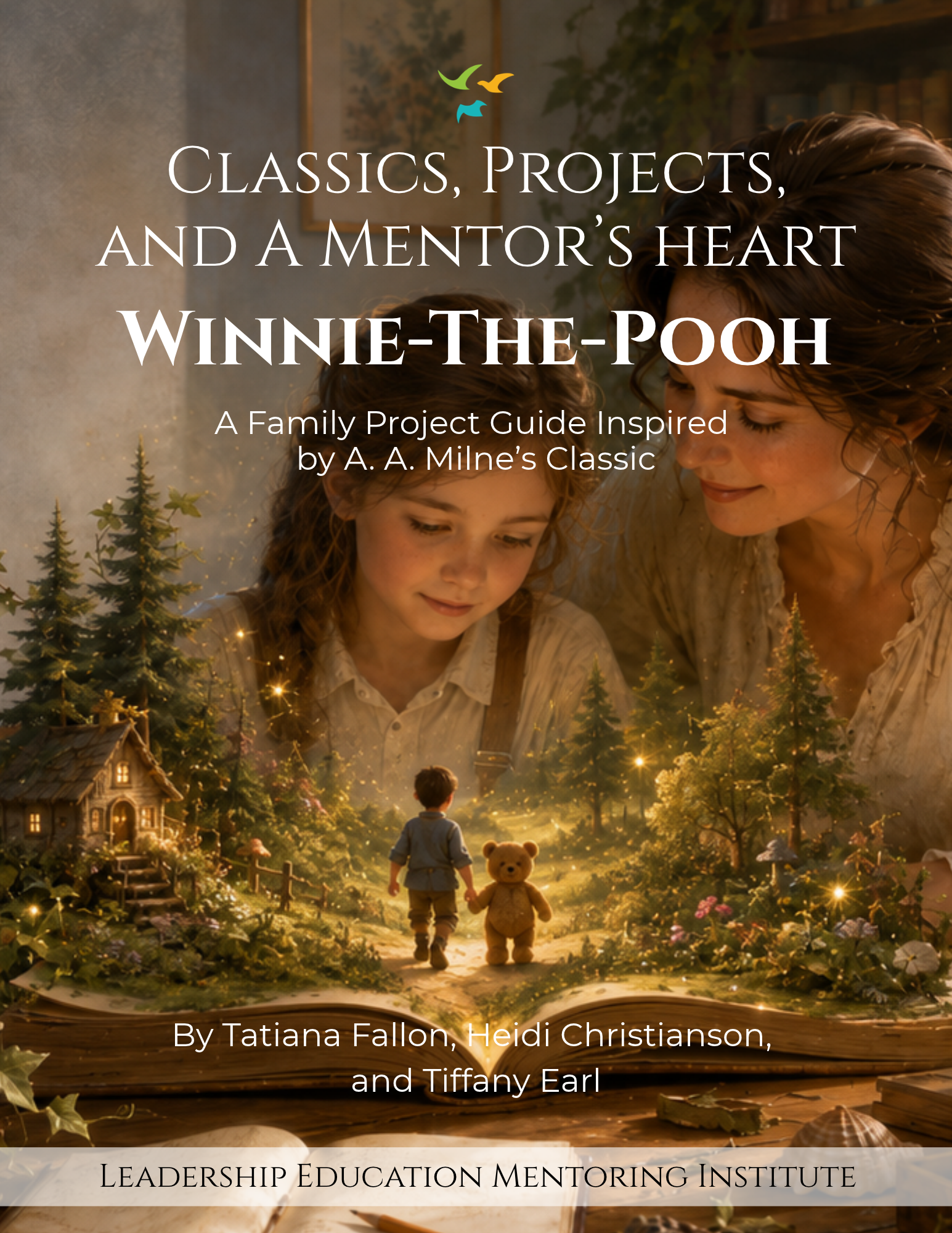
Classics, Projects, and a Mentor's Heart: Winnie-the-Pooh
A Family Project Guide Inspired by A.A. Milne's Classic
By Tatiana Fallon, Heidi Christianson, and Tiffany Earl | Leadership Education Mentoring Institute
Help your children find the big ideas hiding in a small, funny book.
You want all your children, from your youngest listener to your teen, to love great books, think for themselves, and keep gathering on the couch with you. With a little guidance, a good book can become the best part of your day, full of real conversation and ideas your children want to follow.
This is the book that gathers everyone, and older children love it too.
A bear of very little brain floats up to a bees’ nest on a balloon, gets stuck in Rabbit’s front door, and goes hunting for Woozles that turn out to be his own footprints. This guide covers all four of A.A. Milne’s original books: Winnie-the-Pooh, The House at Pooh Corner, and the poetry collections When We Were Very Young and Now We Are Six.
Milne wrote gently enough for a five-year-old and truly enough that a twelve-year-old, or a parent, keeps finding something new. Older children catch the wordplay and jokes that sail past the little ones, and they’re ready for the bigger questions underneath, like what it means to grow up. They can take a turn reading aloud to younger brothers and sisters, too.
Why this book
Small and brave. Piglet is frightened of nearly everything and brave anyway, even giving his own house to Owl. Children learn that courage doesn’t depend on size.
Loved as you are. Pooh isn’t the cleverest animal in the Wood, and he’s everyone’s best friend. That’s a comfort for any child who worries they aren’t quick enough.
Friendship and forgiveness. Christopher Robin reads to Pooh while he’s stuck, and the friends make Eeyore’s birthday happy even with a popped balloon. Children see what good friends actually do.
Imagination can become something real. Heffalump traps, expotitions, and a brand-new game called Poohsticks show children that what they dream up can turn into something they make.
Growing up without losing what you love. The books end with Christopher Robin growing up at the Enchanted Place, a tender way into talking about change as a family.
Along the way, you practice the skills of a mentor. The guide shows you how to ask questions that open a conversation, like asking “what” instead of “why,” and how to notice when play is the beginning of a project. With little ones, building with blocks or holding a stuffed bear while you read counts as listening.
A great book and a project are real learning. A single project pulls several subjects together. Building a relief map of the Hundred Acre Wood brings in geography, math, and art. Planning a real family “expotition,” with a route and a packing list, covers math and geography, and a honeybee model explains in science terms why Pooh’s rain-cloud disguise never had a chance. You can write down what each project covered after it’s done, for your records or for anyone who needs to see it.
How it works
Get the books. They’re easy to find at almost any library.
Read a session together. Older children can read aloud to younger ones.
When an idea won’t let go, help it become your child’s own project.
Inside: twelve reading sessions covering both story books, with the poems woven in and discussion questions for younger and older children; a guide to Socratic-style discussion; two printable Classic Bookmarks and a Family Quote Wall; activities from ten minutes to an afternoon; dozens of project ideas plus larger multi-day projects; and printable forms for planning, sharing, and keeping a session record.
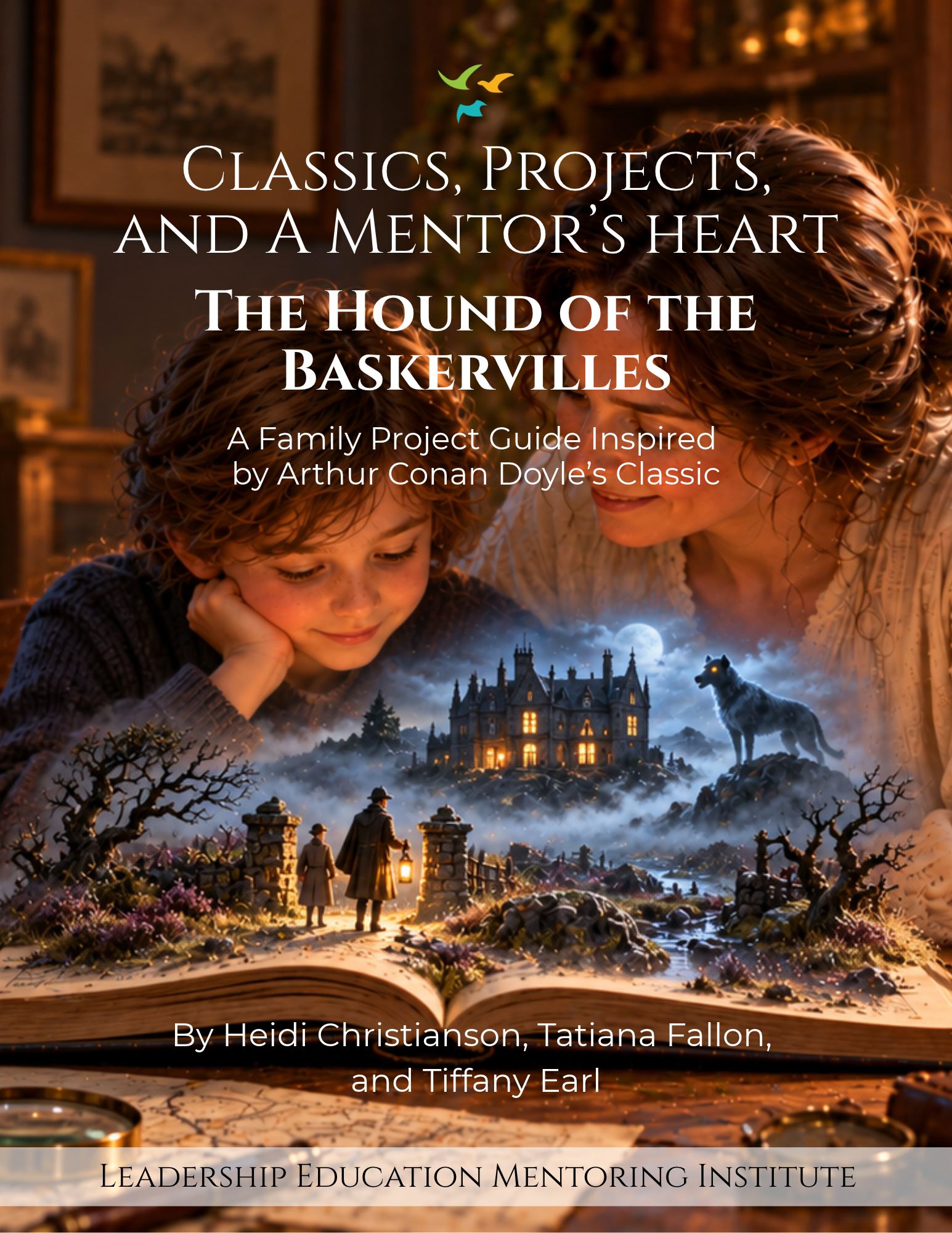
By Heidi Christianson, Tatiana Fallon, and Tiffany Earl
Help your children learn to think for themselves, one clue at a time.
You want all your children, from your youngest listener to your teen, to love great books, think for themselves, and keep gathering on the couch with you. With a little guidance, a good book can become the best part of your day, full of real conversation and ideas your children want to follow.
This is the book that brings everyone back to the couch.
When Sir Charles Baskerville is found dead on the moor, an old legend blames a demon hound. Sherlock Holmes refuses to believe in curses. Your family works the case alongside him, keeping a clue list and deciding for yourselves whether the hound is real.
A great book and a project are real learning. A single project pulls several subjects together. Mapping the moor brings in geography, math, and art. Re-holding Sir Charles’s inquest covers history, research, writing, and public speaking. You can write down what each project covered after it’s done, for your records or for anyone who needs to see it.
Why this book
Facts over fear. Children practice separating what they know from what they’re afraid of, in their schoolwork and on dark nights.
Courage and loyalty. Watson stays, walks out onto the moor at night, and keeps his word.
People aren’t always who they seem. Learning to tell the difference builds discernment.
Loyalty versus honesty. Some characters keep secrets to protect someone they love. Was that right?
The past doesn’t decide who you are. Sir Henry inherits a legend of fear and chooses to face it.
Along the way, your children learn to think like detectives. They learn to tell what they saw from what they guessed, to back up a hunch with evidence, and to change their minds when the evidence changes. You practice the skills of a mentor too: asking instead of telling, and thinking out loud even when the story proves you wrong.
How it works
Open the book. It’s free online, so you can start tonight.
Read a session together and update your clue list.
When an idea won’t let go, help it become your child’s own project.
Inside: twelve reading sessions with questions and activities, a parent note before each session, project ideas across subjects, printable bookmarks and planning sheets, and Clues by Chapter, a parent’s reference to every clue.
Don’t let read-aloud time quietly slip away. Gather your detectives and open the case.
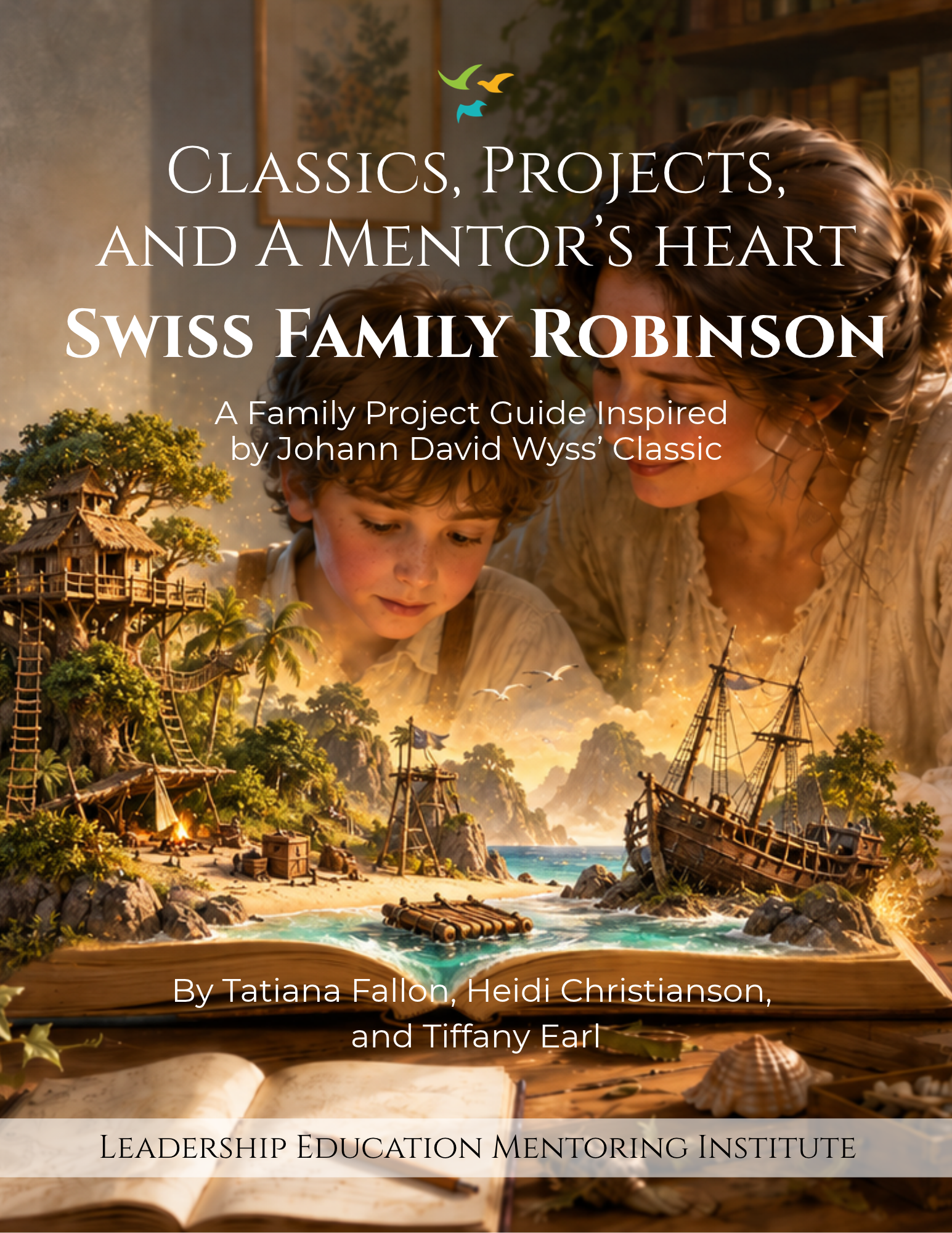
Classics, Projects, and a Mentor's Heart: Swiss Family Robinson
A Family Project Guide Inspired by Johann David Wyss's Classic
By Tatiana Fallon, Heidi Christianson, and Tiffany Earl | Leadership Education Mentoring Institute
Help your children discover they can figure things out, one problem at a time.
You want all your children, from your youngest listener to your teen, to love great books, think for themselves, and keep gathering on the couch with you. With a little guidance, a good book can become the best part of your day, full of real conversation and ideas your children want to follow.
This is the book that turns your family into a team.
A storm drives the Robinsons’ ship onto the rocks, and a father, a mother, and four very different sons have to build a life out of whatever they can salvage. They start with a home in the branches of a giant tree and a boat made of washtubs. Ten years later, a sail finally appears on the horizon. Your family lives it with them, chapter by chapter.
Why this book
Resourcefulness. Every chapter is a problem the family solves with what’s at hand. Children start asking how things actually work, and believing they can figure them out.
Every strength is needed. Cautious Fritz, thoughtful Ernest, restless Jack, and young Franz each find their own way to be useful. Children see that their gifts matter, and so do their siblings’.
Learning by doing. The father teaches his sons through the work in front of them as it comes up, a picture of mentoring parents can borrow.
Brave or reckless? Fritz’s choices and Jack’s lesson about too much fruit give children words for good judgment.
Hard things, faced together. The family lives through danger and loss, and at the end they have to decide whether to stay or go home.
Along the way, your children learn to think and disagree well. They back up their opinions with the story and listen to a brother or sister who sees it differently. Sometimes a discussion ends with everyone still holding different views, and that’s fine. You practice the skills of a mentor too: asking instead of telling, and letting the family think it through together.
A great book and a project are real learning. A single project pulls several subjects together. Building a working model of the family’s flour mill brings in science, practical arts, and writing. Plotting every animal in the book on a world map covers geography and science, and raises the question of whether an island like this could exist. You can write down what each project covered after it’s done, for your records or for anyone who needs to see it.
How it works
Get the book. The guide follows the Fingerprint Publishing 2024 edition.
Read a session together. Older children can take a turn reading aloud.
When an idea won’t let go, help it become your child’s own project.
Inside: twelve reading sessions covering all 18 chapters, with vocabulary, discussion questions, and a running list of the animals the family meets; a guide to introductory Socratic discussion; printable bookmarks, a Family Quote Wall, and a project planning sheet; activities from ten minutes to an afternoon; and dozens of project ideas, plus four larger ones like a family documentary or the rescue plan the Robinsons never made.
Don’t let read-aloud time quietly slip away. Gather your crew and open the book.
Curious how this approach works with a book that's not on this list?
The free guide below walks you through the method.
Download the free guide
Classics, Projects, and a Mentor’s Heart
and learn how to begin mentored project-based learning with one classic, one question, and one meaningful project, without adding complicated curriculum or expensive supplies.
Your homeschool does not need to be more complicated to become more meaningful.
Learn how to use
great books and project-based learning to help your children think, create, and grow.

What makes this different...
This isn't a full curriculum plan, a long list of assignments, or a complicated project manual. Whether you start with a guide built for a specific classic or the free introduction to the method, it's the same simple starting place: begin with one book, notice what sparks curiosity, and invite your child into meaningful work.
The goal is not to produce a perfect project.
The goal is to help your child wonder, think, speak, listen, work, serve, create, and grow.

This Approach Is for You If…
You want your children to experience great books as more than assigned reading.
You like the idea of project-based learning, but you're not sure how to begin.
You want learning to feel more connected, purposeful, and alive.
You want to mentor your children without controlling every step.
You're looking for a simple way to bring reading, discussion, creativity, and real-life skills together.
You want to start small instead of overhauling your entire homeschool.
If that sounds like you, pick up a guide for a classic your family is ready to read, or start with the free introduction to see how the whole method works.

About LEMI
Leadership Education Mentoring Institute helps families and communities create transformational learning experiences through great books, mentoring, simulations, writing, discussion, projects, and meaningful real-life work.
We believe education is not just about completing assignments. It is about helping children connect hearts, minds, and purpose as they grow in wisdom, skill, character, and leadership.