 Image 1 of 1
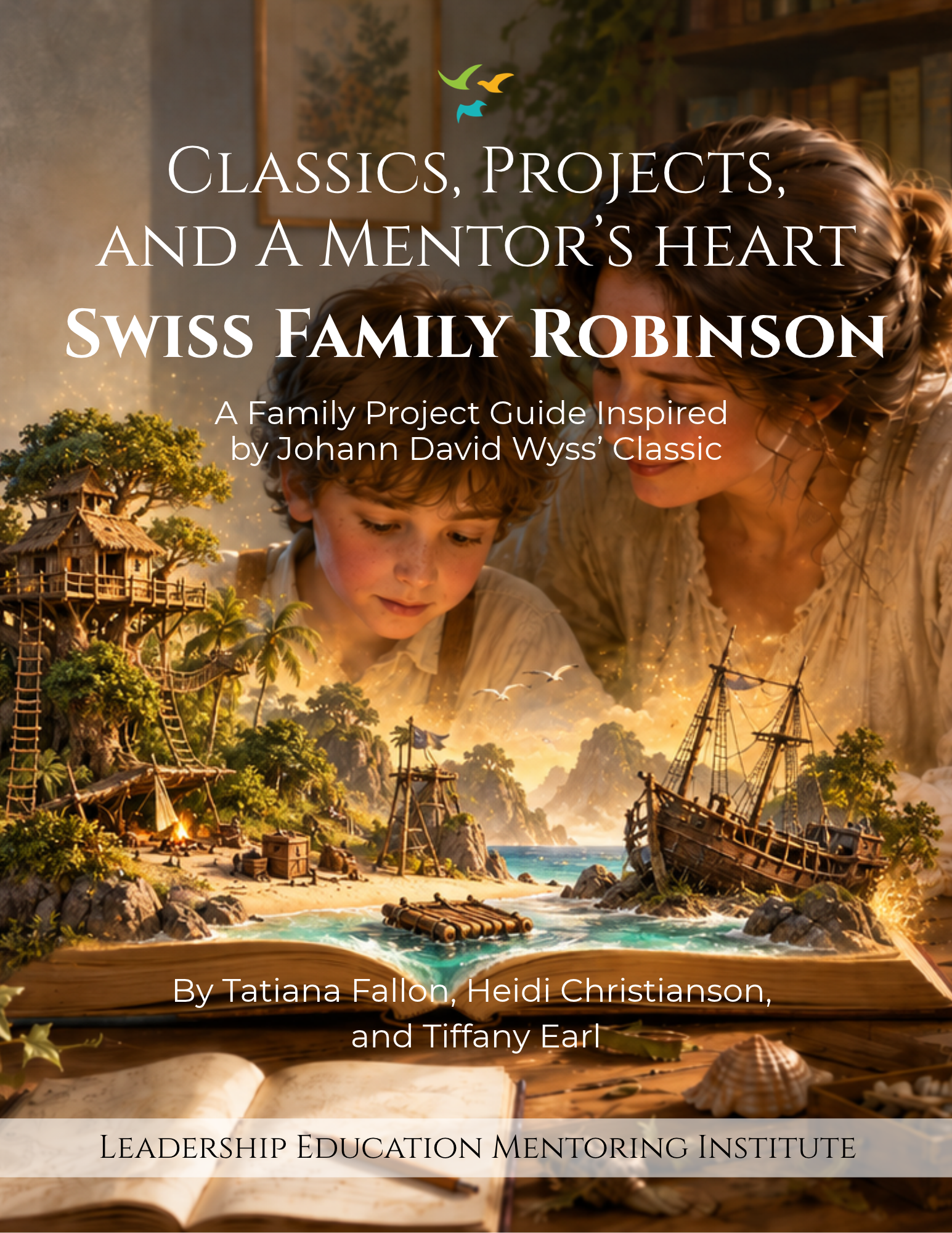
Classics, Projects, and a Mentor's Heart: Swiss Family Robinson
A Family Project Guide Inspired by Johann David Wyss's Classic
By Tatiana Fallon, Heidi Christianson, and Tiffany Earl | Leadership Education Mentoring Institute
Help your children discover they can figure things out, one problem at a time.
You want all your children, from your youngest listener to your teen, to love great books, think for themselves, and keep gathering on the couch with you. With a little guidance, a good book can become the best part of your day, full of real conversation and ideas your children want to follow.
This is the book that turns your family into a team.
A storm drives the Robinsons’ ship onto the rocks, and a father, a mother, and four very different sons have to build a life out of whatever they can salvage. They start with a home in the branches of a giant tree and a boat made of washtubs. Ten years later, a sail finally appears on the horizon. Your family lives it with them, chapter by chapter.
Why this book
Resourcefulness. Every chapter is a problem the family solves with what’s at hand. Children start asking how things actually work, and believing they can figure them out.
Every strength is needed. Cautious Fritz, thoughtful Ernest, restless Jack, and young Franz each find their own way to be useful. Children see that their gifts matter, and so do their siblings’.
Learning by doing. The father teaches his sons through the work in front of them as it comes up, a picture of mentoring parents can borrow.
Brave or reckless? Fritz’s choices and Jack’s lesson about too much fruit give children words for good judgment.
Hard things, faced together. The family lives through danger and loss, and at the end they have to decide whether to stay or go home.
Along the way, your children learn to think and disagree well. They back up their opinions with the story and listen to a brother or sister who sees it differently. Sometimes a discussion ends with everyone still holding different views, and that’s fine. You practice the skills of a mentor too: asking instead of telling, and letting the family think it through together.
A great book and a project are real learning. A single project pulls several subjects together. Building a working model of the family’s flour mill brings in science, practical arts, and writing. Plotting every animal in the book on a world map covers geography and science, and raises the question of whether an island like this could exist. You can write down what each project covered after it’s done, for your records or for anyone who needs to see it.
How it works
Get the book. The guide follows the Fingerprint Publishing 2024 edition.
Read a session together. Older children can take a turn reading aloud.
When an idea won’t let go, help it become your child’s own project.
Inside: twelve reading sessions covering all 18 chapters, with vocabulary, discussion questions, and a running list of the animals the family meets; a guide to introductory Socratic discussion; printable bookmarks, a Family Quote Wall, and a project planning sheet; activities from ten minutes to an afternoon; and dozens of project ideas, plus four larger ones like a family documentary or the rescue plan the Robinsons never made.
Don’t let read-aloud time quietly slip away. Gather your crew and open the book.